Welcome to another DeFi Markets Update—your no-nonsense briefing on the cryptobanking plumbing and market pulse.
Can Large Allocators Stabilise Onchain Borrowing Rates?
Last week, we noted that the Grove × Steakhouse USDC vault grew by $120m between 27 and 31 October, even as users withdrew funds from Steakhouse vaults after the Binance hack. Which poses the question: can large allocators help keep onchain borrowing rates steadier by adding liquidity during volatile periods?
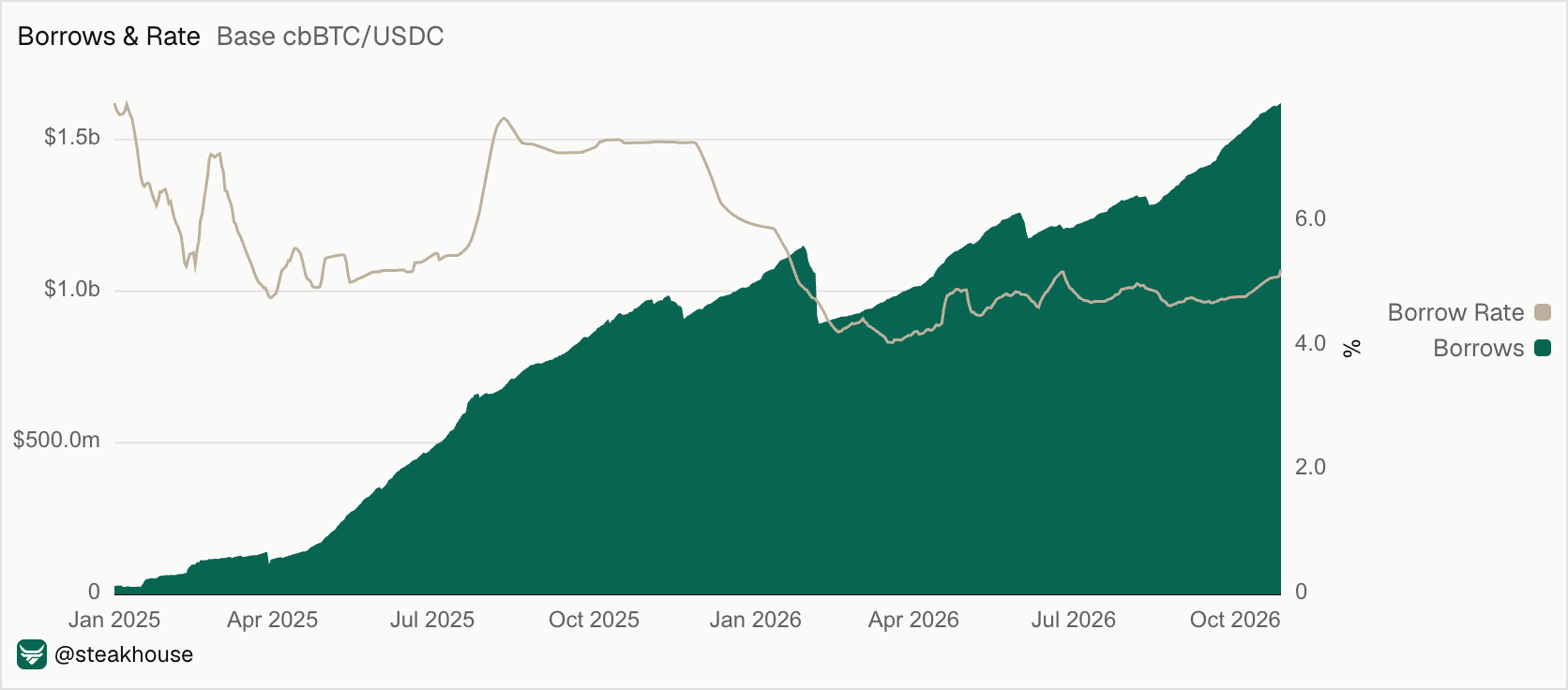
We looked at Base’s cbBTC/USDC Morpho market, where borrowing grew from $1.2bn in June to over $1.6bn by November. Even with this increase, rates stayed ‘stable’ at around 4.5-5%, as supply grew by about $420m over the same period, helping to keep pace with borrowing.
Moreover, Spark and Grove are now among the market’s largest depositors, alongside Ethena, so changes in their allocations can affect rates. This could be risky, in a sense it makes users dependent on institutional decisions.
However, the data also shows that each time utilisation rose above 90% in the market, large allocators had an incentive to supply USDC at the higher rates, helping bring rates back down quickly.
For example, during the Binance hack, Spark withdrew about $250m from the market between 28 October and 7 November. Utilisation rose above 90%, and borrow rates climbed to 7-9.5%. Grove then deposited circa $130m, and rates returned to around 5.5% within two days.
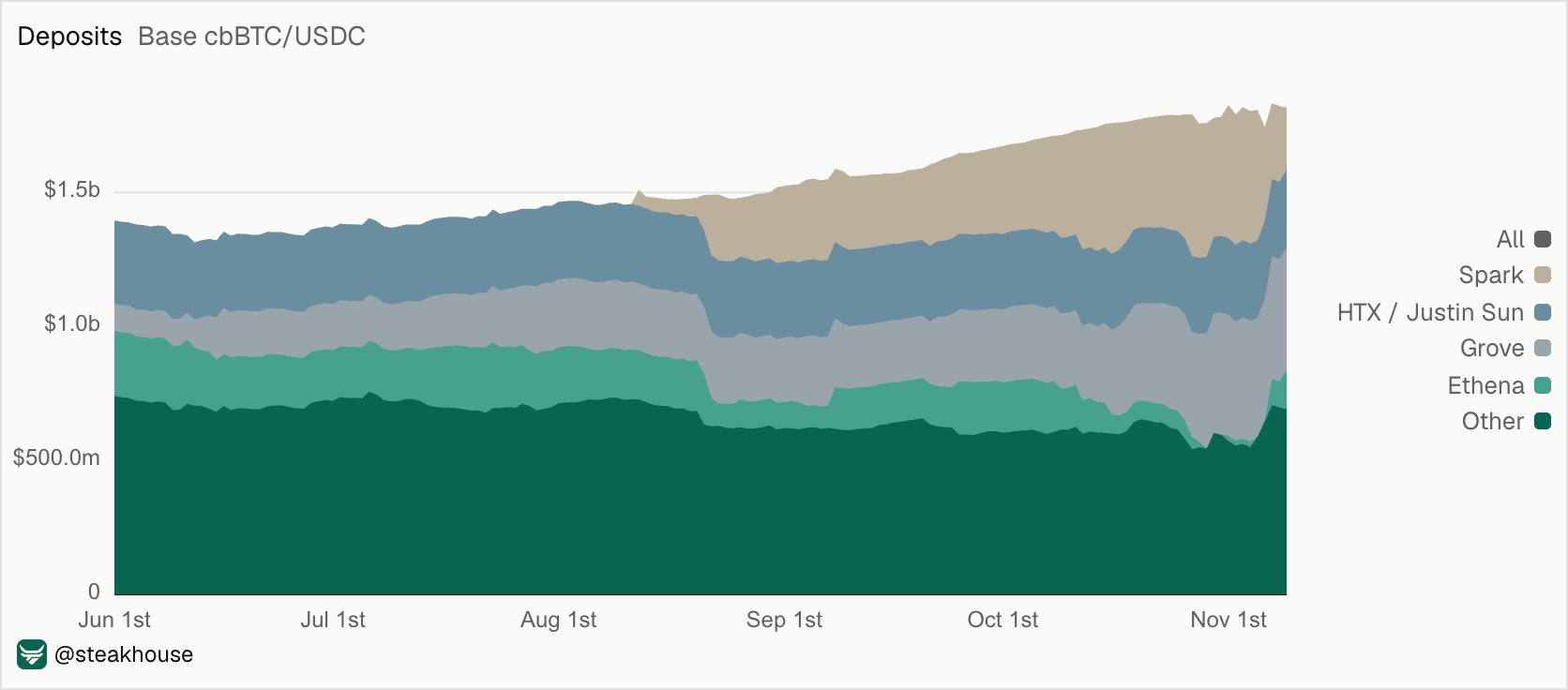
This reflects a basic market dynamic, when higher yields attract more competition. In this case, large allocators act as rate stabilisers by supplying liquidity when rates rise.
Interestingly, for every $1 increase in borrowing since June, Grove’s supply grew by $1.42 and Spark’s by $0.78. Other allocators and Morpho vaults withdrew about $1.04, leaving net supply up by 16 cents more than borrowing.
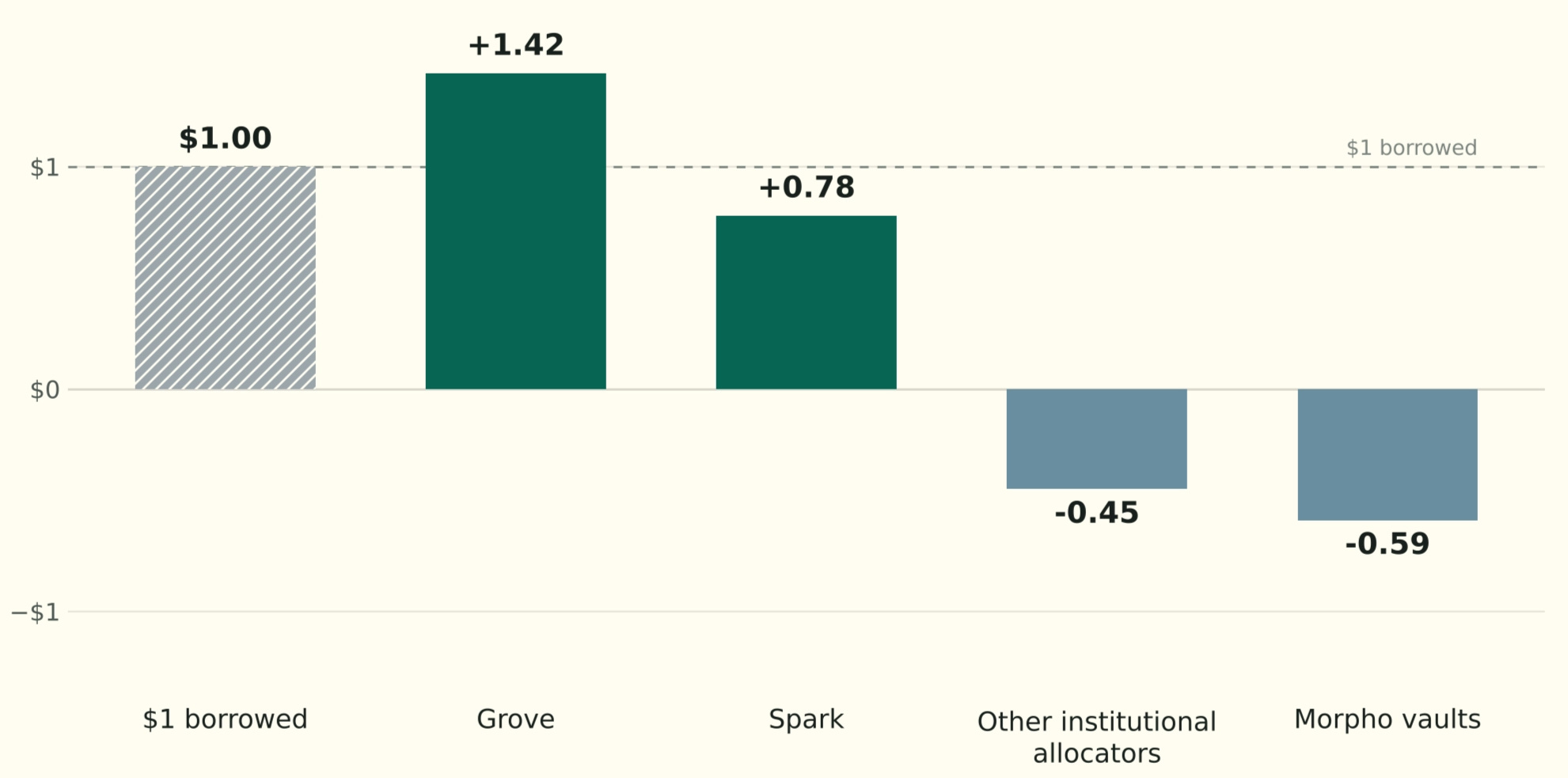
In conclusion, yes, large allocators can help keep rates steady during volatile periods. When volatility pushes borrowing rates up, yield-seeking allocators can add stablecoin liquidity, easing utilisation and bringing rates back down.
The First Market for Borrowing Against Paxos Gold Comes to Morpho Base
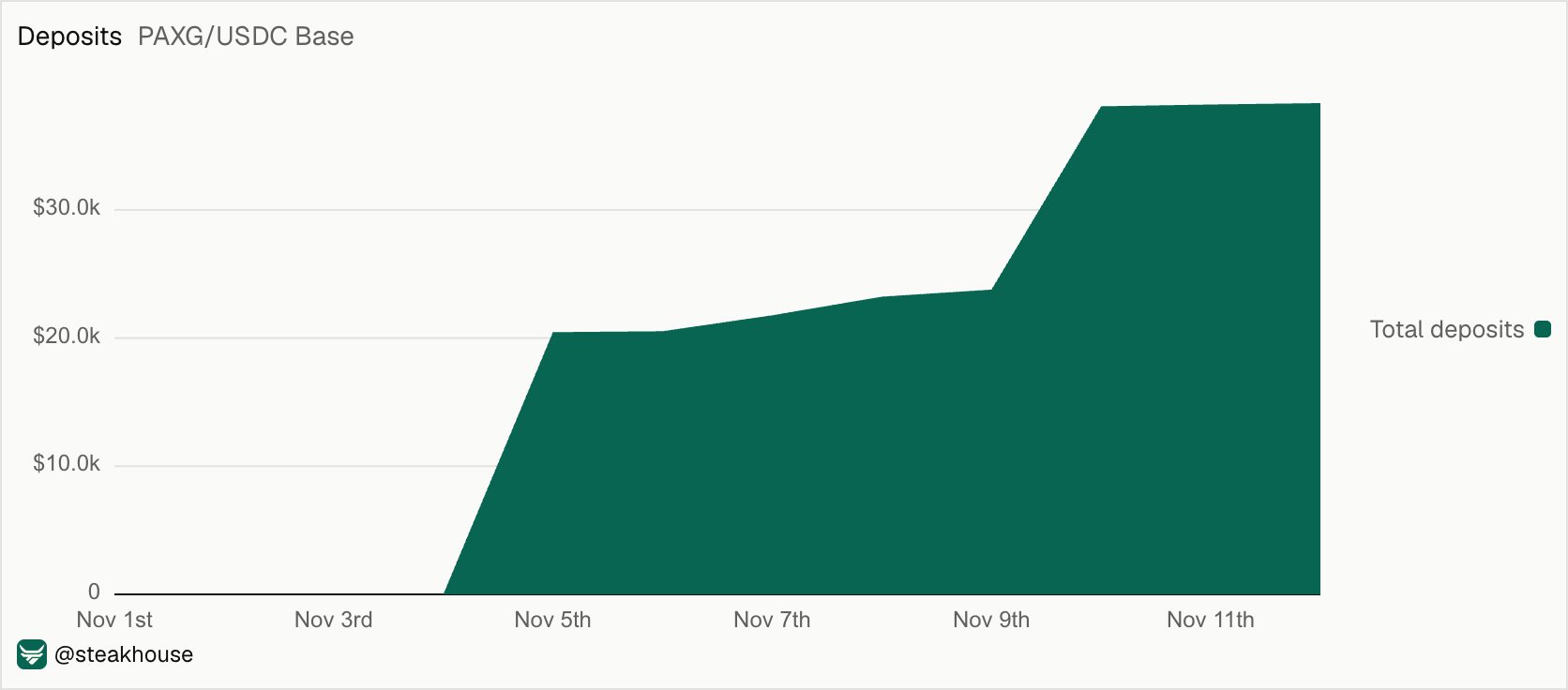
Coinbase launched a new Morpho market on Base for PAXG as collateral for USDC loans, curated by Steakhouse.




This gives PAXG holders a way to borrow against tokenised gold without selling it. But gold’s price now directly affects borrower loan health.
Therefore, we examined how this year’s largest Gold price moves would have affected the market’s loans, for example the 11% one-day price drop in January or the 20% price fall from January to March.

Borrowers in the PAXG/USDC market currently sit at 43% LTV, leaving a 34% cushion before the 77% liquidation threshold. Hence, a repeat of this year’s gold swings would put only a small amount of debt into liquidation, with no lender losses at the market’s current size which has grown to $38k.
Steakhouse Launches Reinsurance PT Markets on Kamino
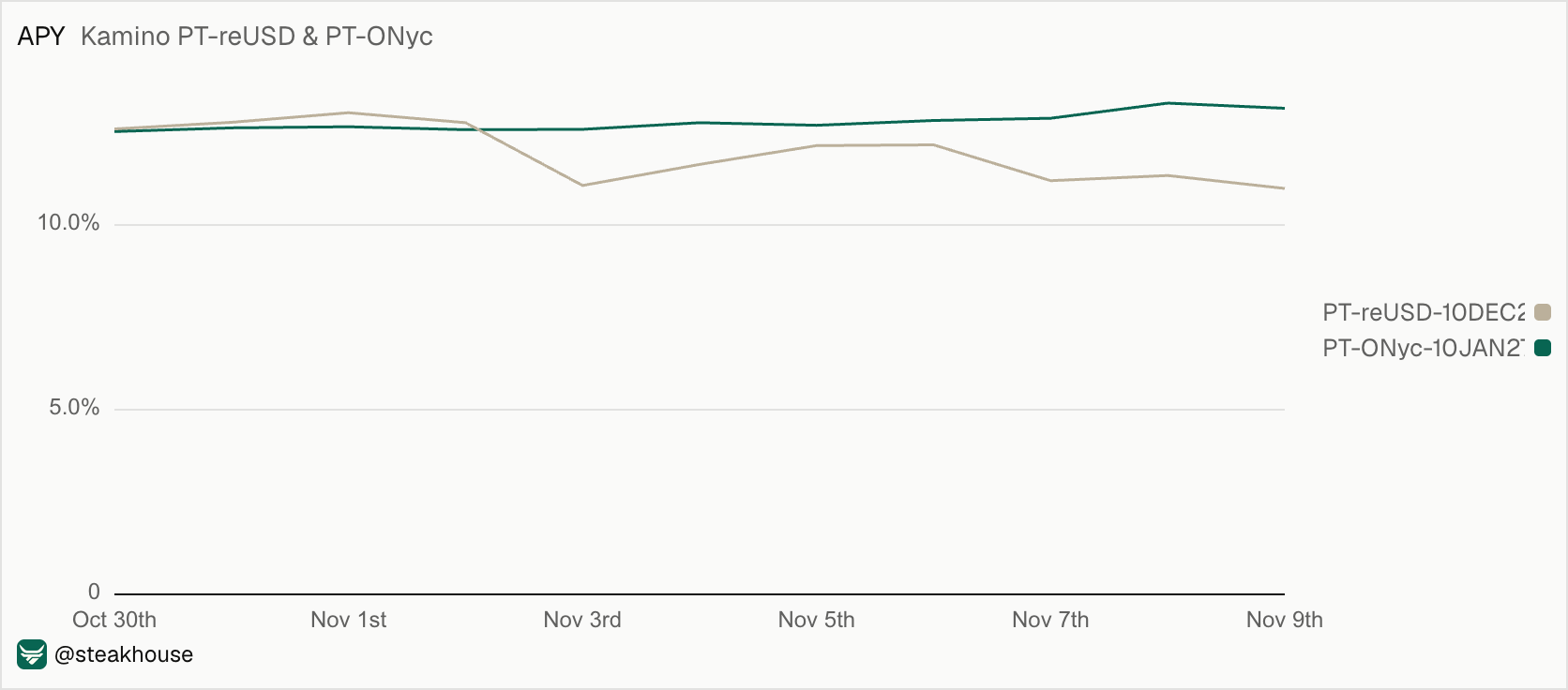
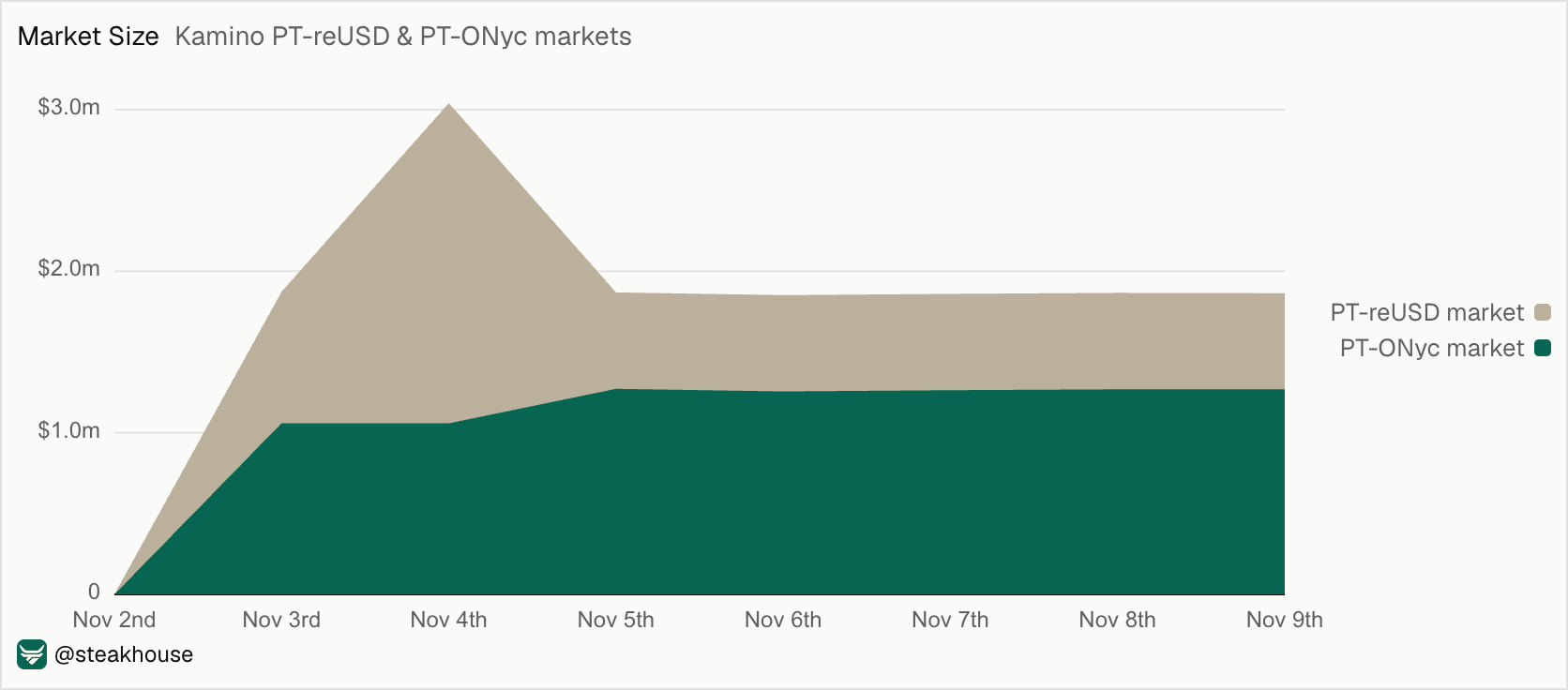
Steakhouse launched two new Kamino markets for PT-reUSD and PT-ONyc. PT-reUSD can be used to borrow USDC or USDG, while PT-ONyc can be used to borrow USDG.
Together, the markets have attracted over $1.8 million in deposits since launching last week.
Both tokens provide exposure to reinsurance yield. reUSD is Re’s yield-bearing stablecoin, backed by real-world insurance assets, and ONyc represents a share of OnRe’s reinsurance account, both supported by onchain and offchain capital.
PT-ONyc currently has a yield of circa 13% and matures on 10 January 2027, while PT-reUSD is around 11% and matures on 10 December 2026.