

Welcome to another DeFi Markets Update—your no-nonsense briefing on the cryptobanking plumbing and market pulse.
Steakhouse Prime USDC V2 Becomes Morpho’s Largest Vault
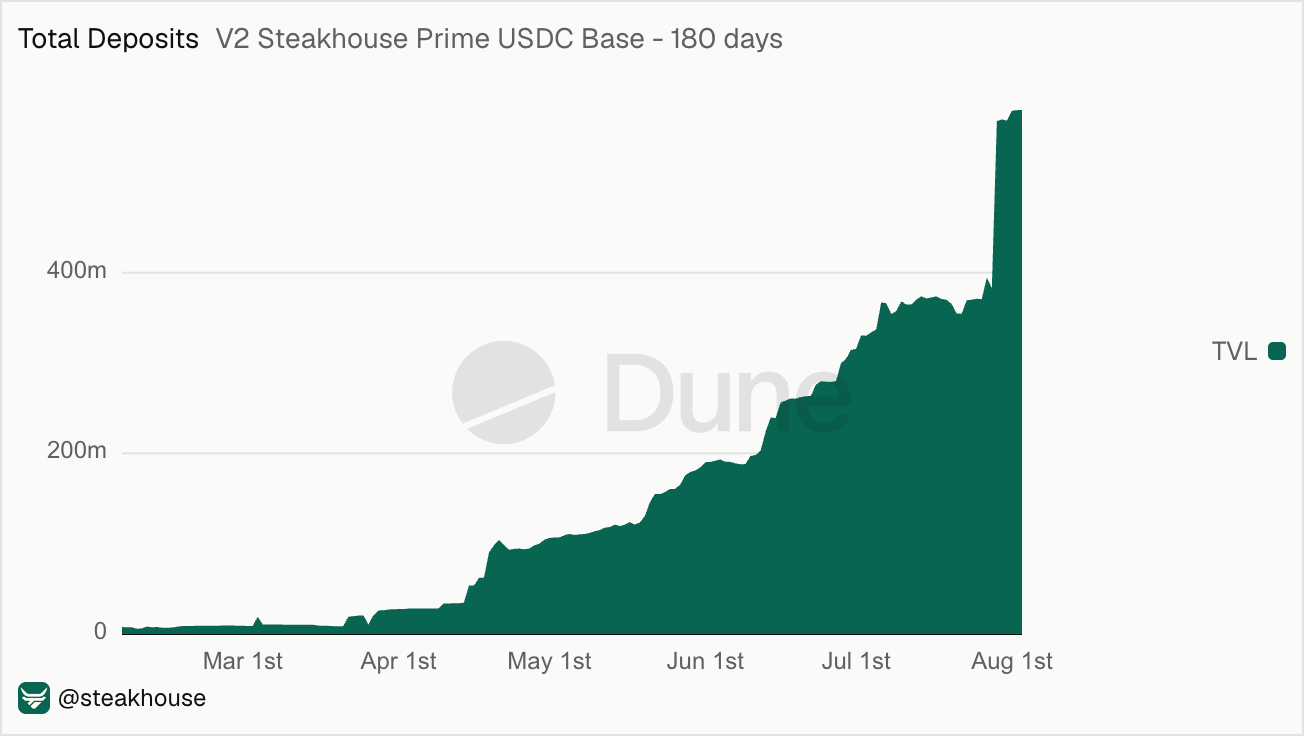
More and more users are migrating from Steakhouse Prime USDC V1 to its V2 counterpart. This week, we witnessed the largest shift to date, with over $200m moving from V1 to V2 in a single day. This brings Steakhouse Prime USDC V2 on Base to over $580m in deposits, making it the largest individual vault on Morpho.
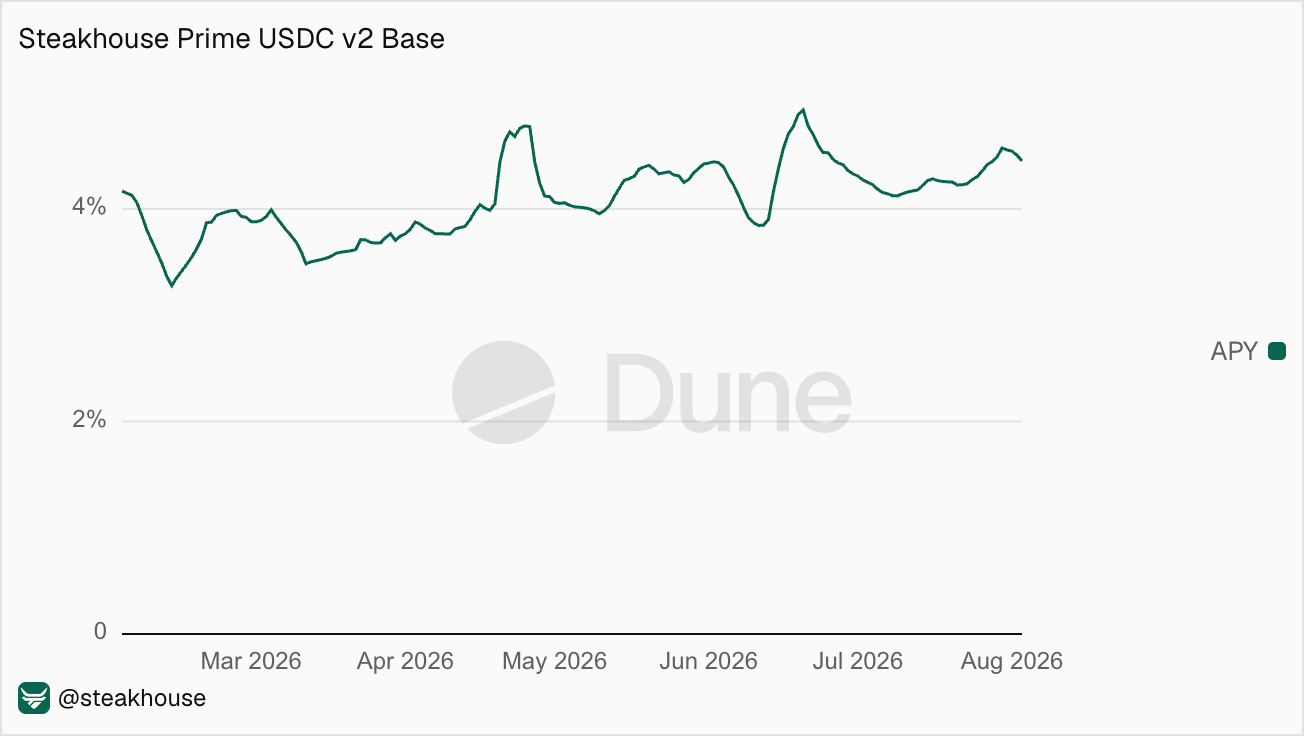
A large share of the vault is currently allocated to cbBTC/USDC, with smaller allocations to cbETH and wstETH markets. This has supported a stable 4–5% yield, with both the 30-day and 90-day APY at 4.38%.
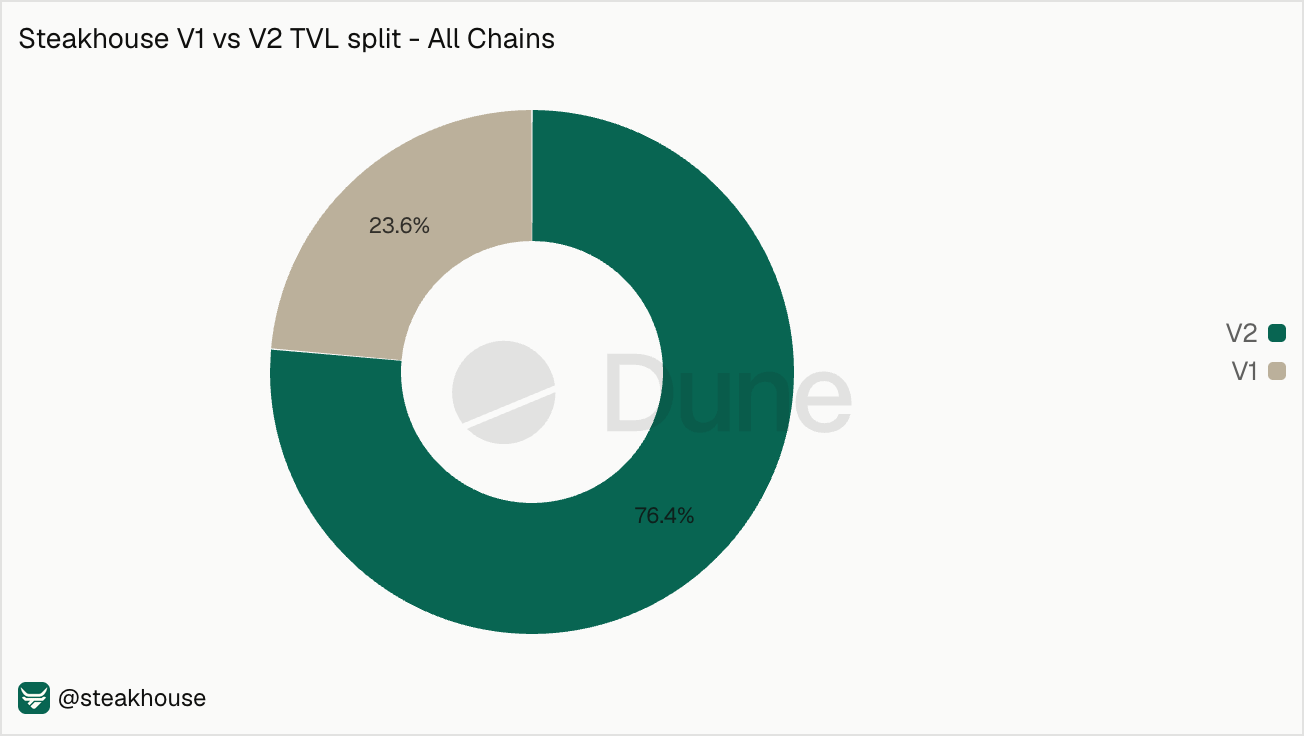
Overall, the migration to V2 is well underway, with more than 76% of deposits across all Steakhouse vaults on Morpho already held in V2. Since the V2 architecture is required for Morpho Midnight’s fixed-rate, fixed-term markets, Steakhouse is ready for the next phase.
Steakhouse in the Media: Vaults, Stablecoins and Onchain Markets
Over the past two months, our folx have appeared in numerous podcasts, interviews and live discussions hosted by Bankless, Schwab Network, Alea, MetaMask, Ledger, Send It, Crypto Valley, and Tiger Research. Across these appearances, our Chefs have explained how stablecoins and public blockchains could reshape lending, asset management and financial distribution. For readers who have not caught every appearance, here is a short look at the main ideas we shared.


In Bankless’s What’s Next for Vaults? and Ledger’s Inside DeFi Vaults, we unpack Steakhouse’s core product: the non-custodial, underwritten vault. Users delegate risk management without transferring custody, while Steakhouse selects acceptable collateral and markets, sets exposure and loan-to-value limits, and applies a consistent framework rather than simply chasing the highest APY. He also discusses depositor vetoes, principal protection, market efficiency, and how insurance and first-loss capital could create clearer ways to price and absorb credit losses.
Additionally, in Alea’s Market Cap, we give a deep dive into Steakhouse’s history, from the founders’ early work analysing Maker as a transparent bank balance sheet to building actively managed vaults on Morpho. We explains how automated reallocations move liquidity between approved markets as conditions change, and why Steakhouse decided early to distribute these products beyond Morpho through wallets, exchanges and fintechs.
To understand why institutions are moving assets and financial products onto public blockchains, we examines the institutional side of this shift on Schwab Network, while the MetaMask discussion brings it closer to the user. Integrations with MetaMask, Robinhood, Coinbase and many more allow platforms to manage the customer experience while Steakhouse handles underwriting, risk management and capital allocation in the background. Users can therefore access stablecoin yield through familiar products without managing the protocols, transactions or smart contracts underneath them.
On the Send It Podcast, we discuss transparent onchain banks, stablecoins as banking in its purest form, the move away from artificial yields and the opportunity for trade finance. The Tiger Research feature captures our approach to risk directly: “Risk in onchain credit markets cannot be removed. It can only be managed, and the curator’s job is to manage it in the open.”
Looking ahead, we see both Steakhouse and Grove helping connect public blockchains with larger financial markets. Steakhouse provides the underwriting and infrastructure behind onchain lending products, while Grove Basin brings up to $1 billion of same-block liquidity to tokenised money-market funds and could connect benchmark rates such as SOFR more directly with DeFi.
EURCV deposits cross €100m as borrowing rises 20x in six months
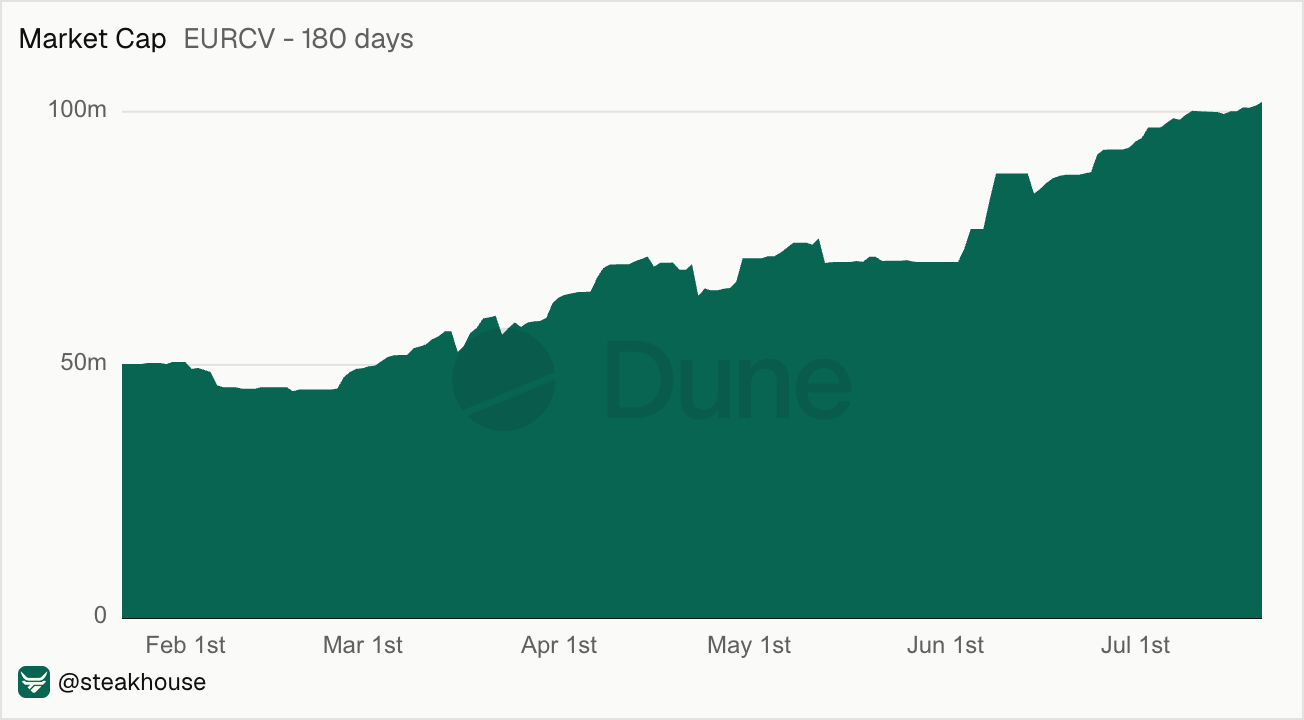
The Steakhouse Prime EURCV vault on Ethereum crossed €100 million in deposits in July 2026, deposits have more than doubled in past six months.
Part of this growth may come from the yield spread available across EURCV markets on Morpho. Users can supply EURCV through the vault at around 3.5%, while borrowing rates remain below 1.75% across most markets and below the current €STR benchmark of 2.19%.
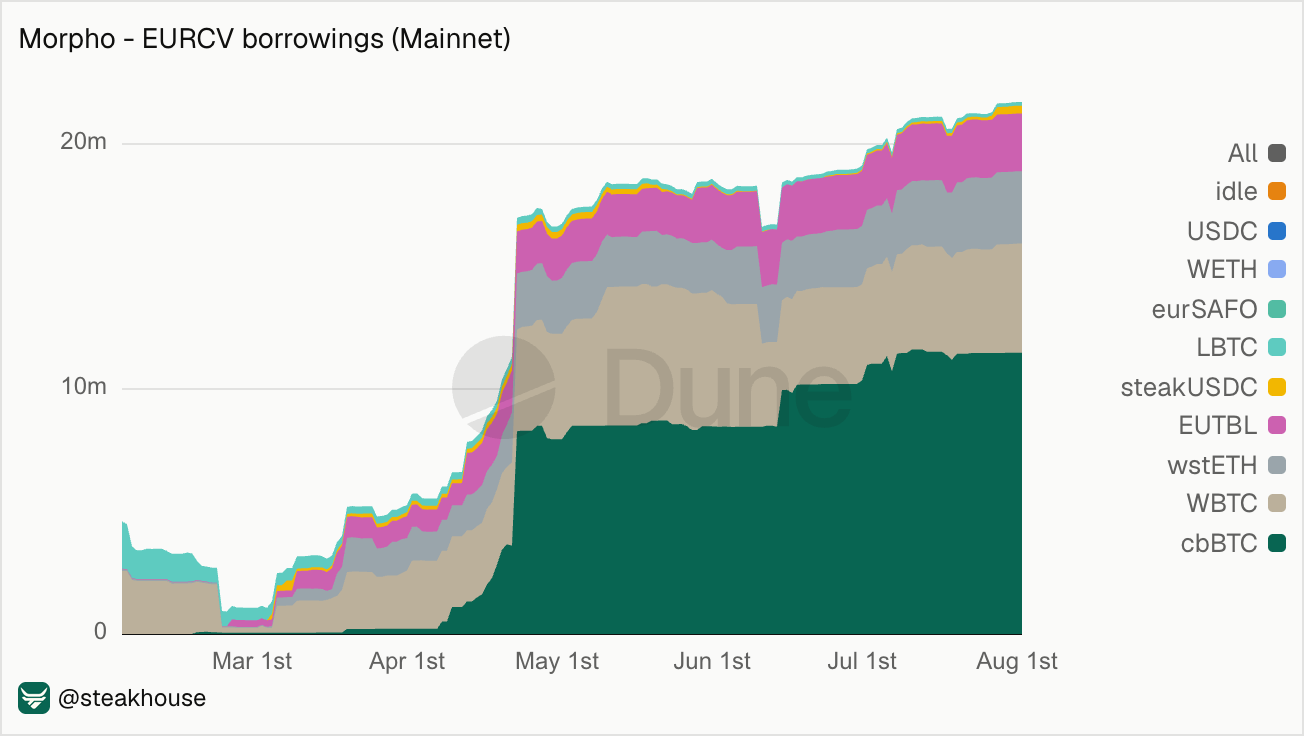
EURCV borrowing increased more than 20x over the same period, rising from approximately €1 million at the end of February to over €21 million in August. Despite this growth, the markets retain deep liquidity, leaving room for further borrowing.
The vault’s current APY is capped at 3.49%, with incentives helping support the available yield and stimulate activity in EURCV lending markets.