Welcome to another DeFi Markets Update—your no-nonsense briefing on the cryptobanking plumbing and market pulse.
The (Re)Launch of “Scottish Banking: A History, 1695–1973”
On June 30th 2026, Steakhouse Financial will host a book launch event in London for “Scottish Banking: A History, 1695–1973” by economic historian S.G. Checkland. Originally published in 1975 and out of print for decades, the book has been republished by Steakhouse with new forewords from Sarah Jane Checkland and our team.


The book traces the evolution of Scottish banking from the founding of the Bank of Scotland in 1695 through the banking consolidations of the twentieth century. Scotland pioneered many banking practices that are standard today, including branch banking, overdraft facilities, interest-bearing deposits, joint-stock banking, and the widespread use of paper notes.
At Steakhouse, we became interested in the book because of its parallels to stablecoins and onchain finance. The expanded edition includes a new Steakhouse foreword exploring how Scotland’s free banking era and today’s stablecoin ecosystem share a common foundation, with privately issued monetary instruments competing for users, liquidity, and trust while settlement, credit allocation, and market adoption emerge through competition between institutions.
Join us in London on June 30 to discuss Scottish banking, stablecoins, and the parallels between the historical and onchain financial systems. If you can’t make it, grab a copy of the book and send us a message!
USDC Deposits Continue Growing on Base
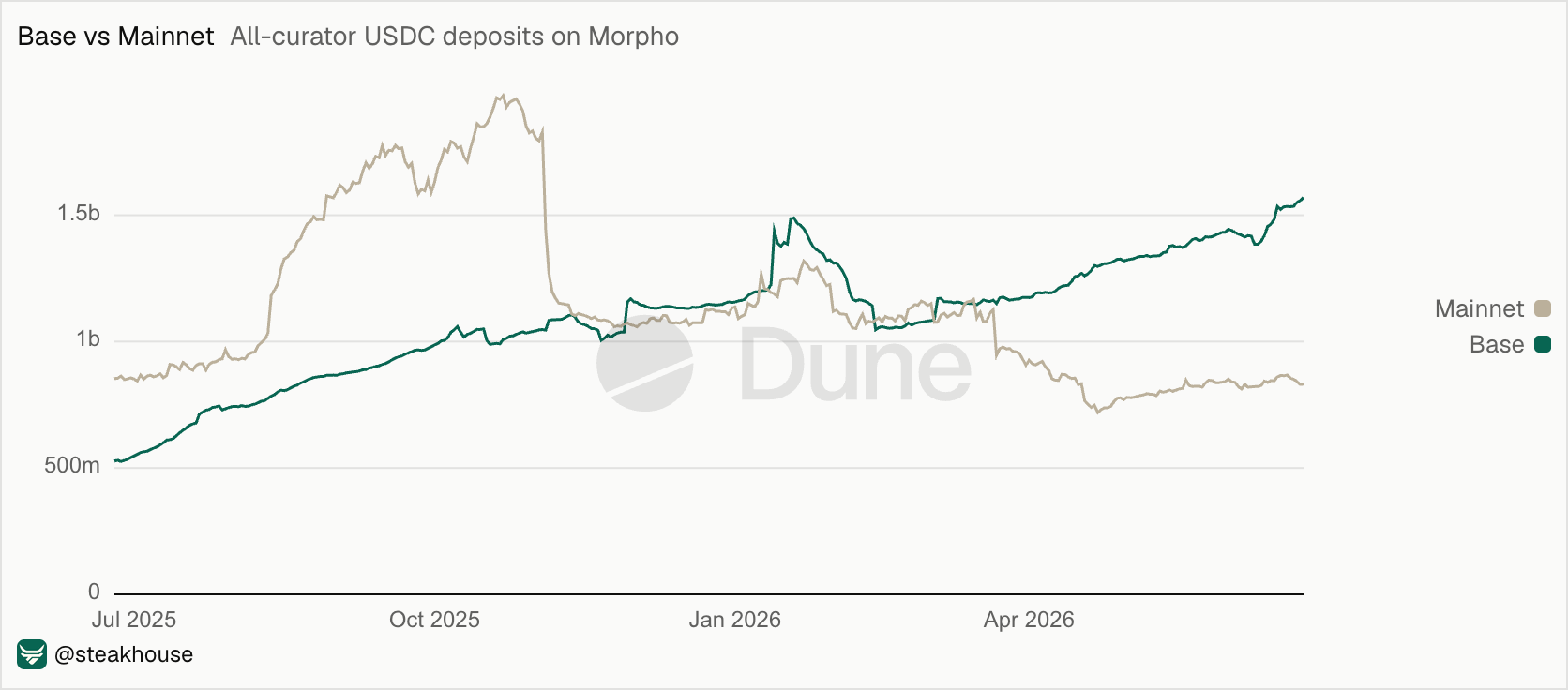
Comparing USDC deposits across all Morpho curators on Base and Ethereum Mainnet, Morpho vaults on Base now hold over $1.5bn of USDC deposits, nearly twice the size that is on Ethereum Mainnet.
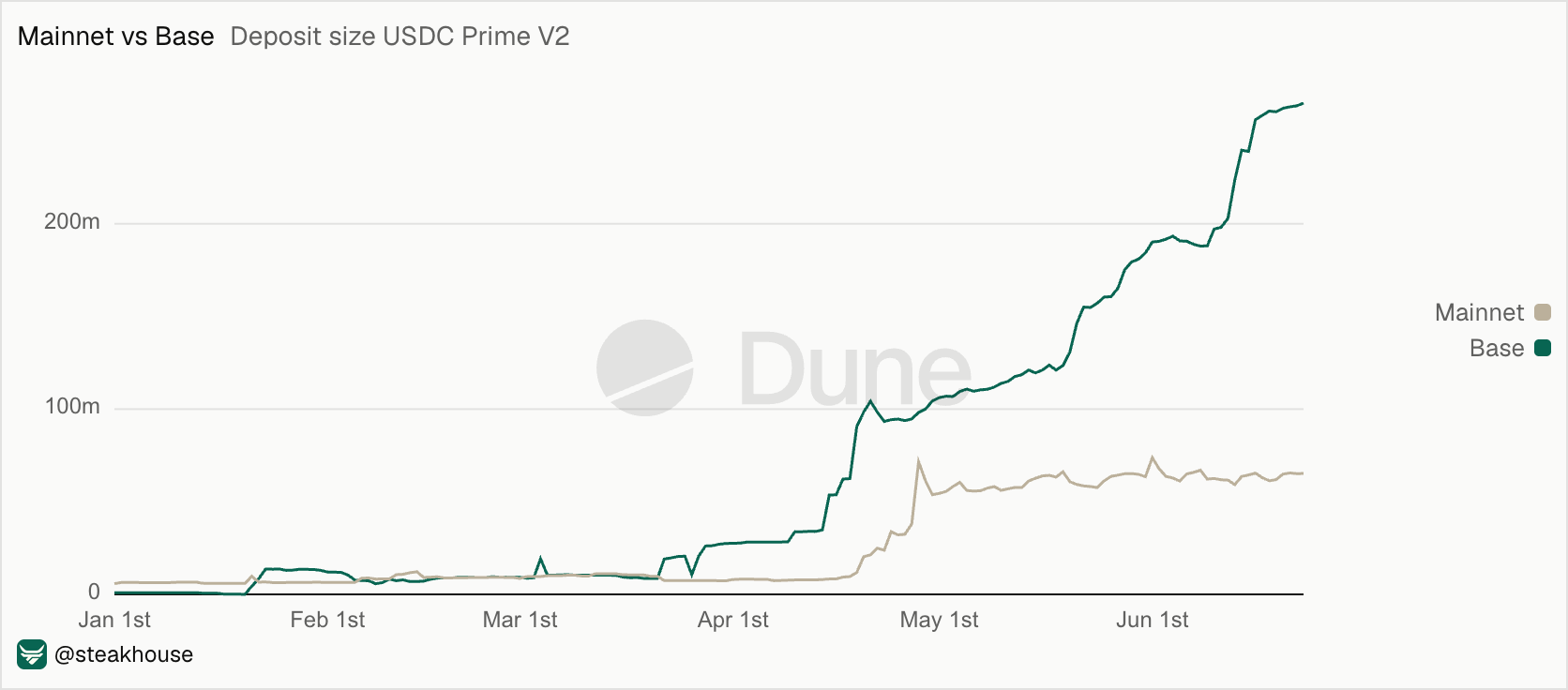
The increase in USDC activity on Base is also reflected in Steakhouse vaults. Steakhouse Prime USDC V2 on Base grew by over 40% in June and now manages more than $275m in deposits. Both the Base and Ethereum Prime USDC V2 vaults launched at the end of 2025 and maintained similar deposit levels until May 2026, but Base has since pulled ahead, with deposits now around 4x larger than the Ethereum vault.
As covered in our previous DeFi Market Updates issue, Coinbase Borrow routes USDC loans through Morpho on Base, creating additional borrowing demand and supporting more consistent utilisation across the underlying markets. This has helped Prime USDC on Base maintain an overall higher lending rate, which naturally attracts more deposits.
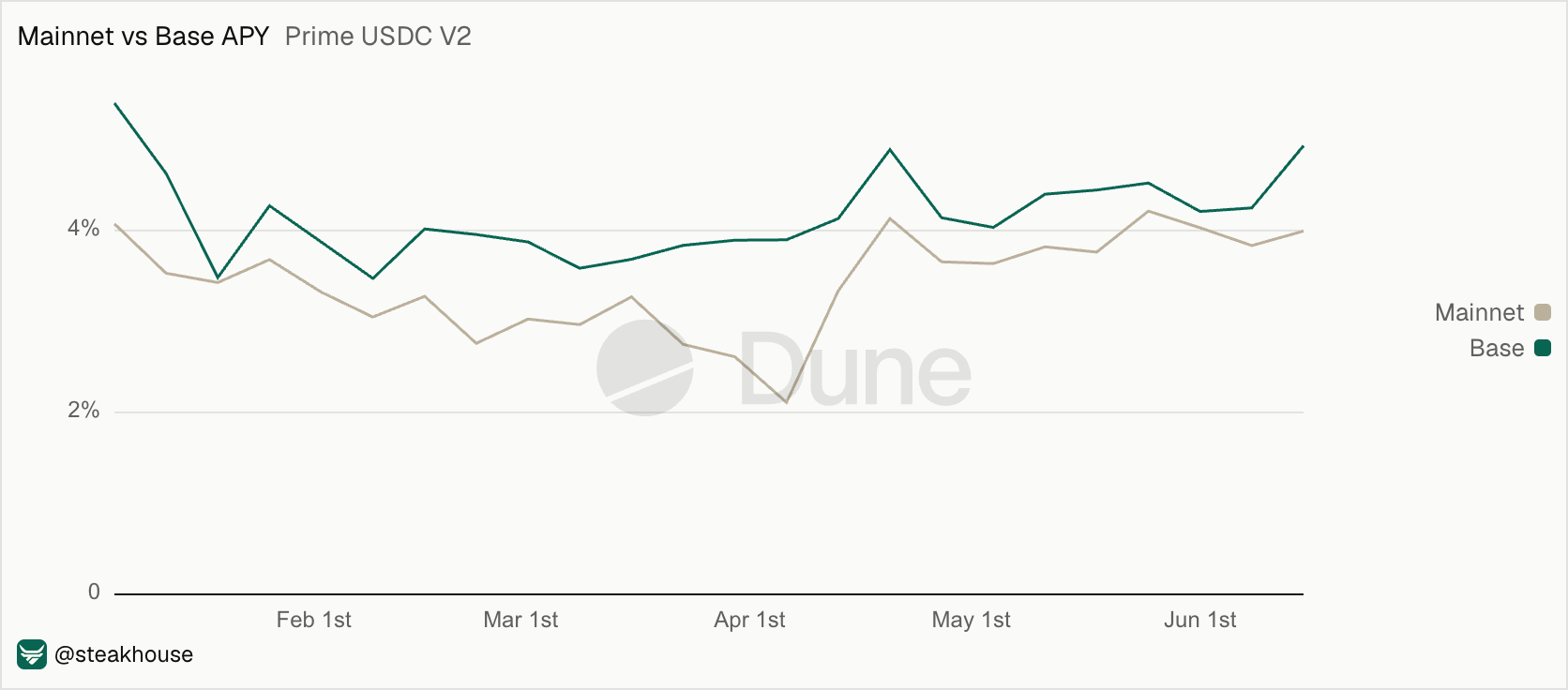
Prime USDC V2 on Base has been earning around 4.0–4.5% APY, while the Mainnet vault has remained closer to 3.7–4.0%.
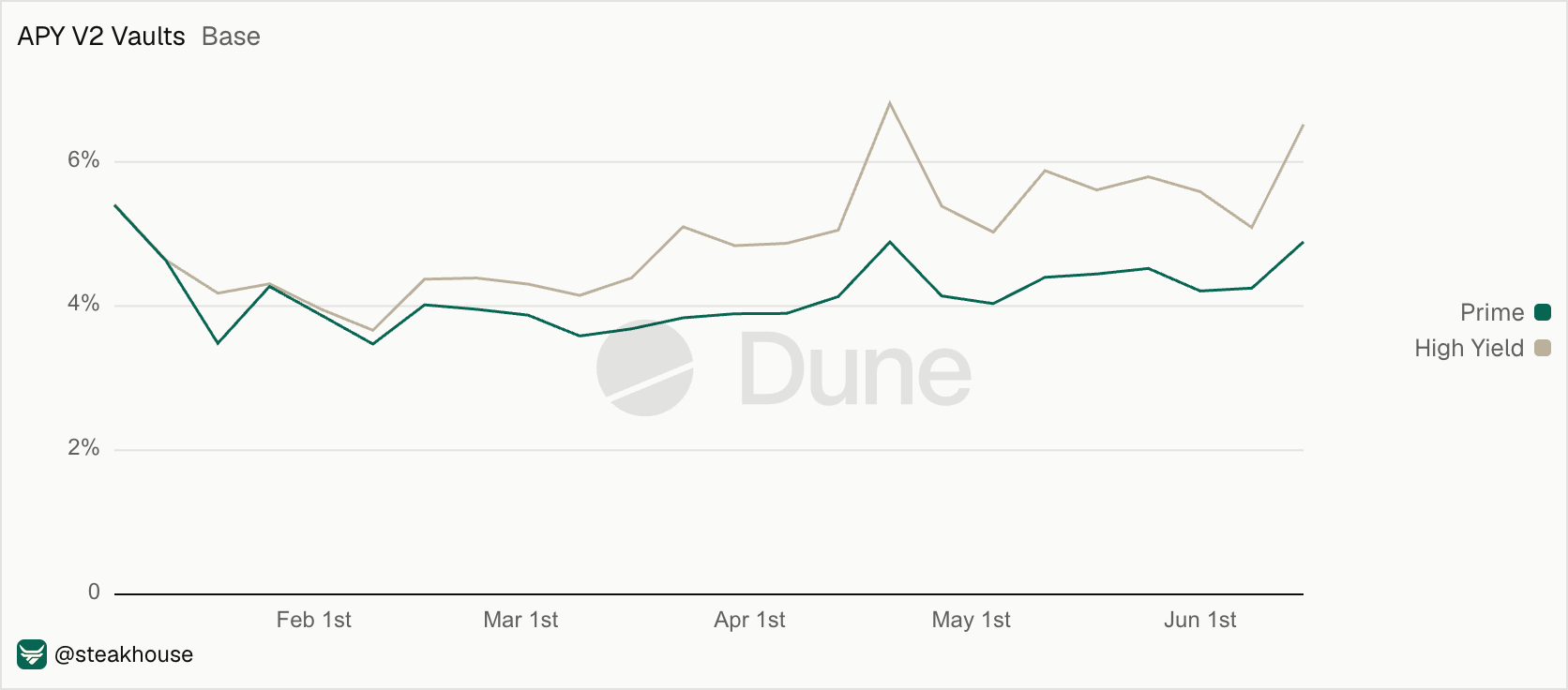
For users seeking higher yield, Steakhouse also curates the High Yield USDC V2 vault on Base. The strategy expands the collateral beyond the blue-chip Prime framework, with around 80% currently allocated to the cbXRP/USDC market, where strong borrowing demand has supported higher lending rates and APY.
Steakhouse Confidential USDC Prime for cUSDC Holders
Steakhouse Confidential Prime USDC is now live on Morpho, allowing Confidential USDC (cUSDC) holders to earn yield from our Prime strategy while keeping balances and transfer amounts encrypted onchain.

cUSDC is Zama‘s confidential version of USDC, designed to keep balances and transaction amounts encrypted on Ethereum. The launch creates the first DeFi yield venue for Confidential USDC on Ethereum, extending the utility of cUSDC beyond transfers and enabling confidential assets to participate in onchain lending.
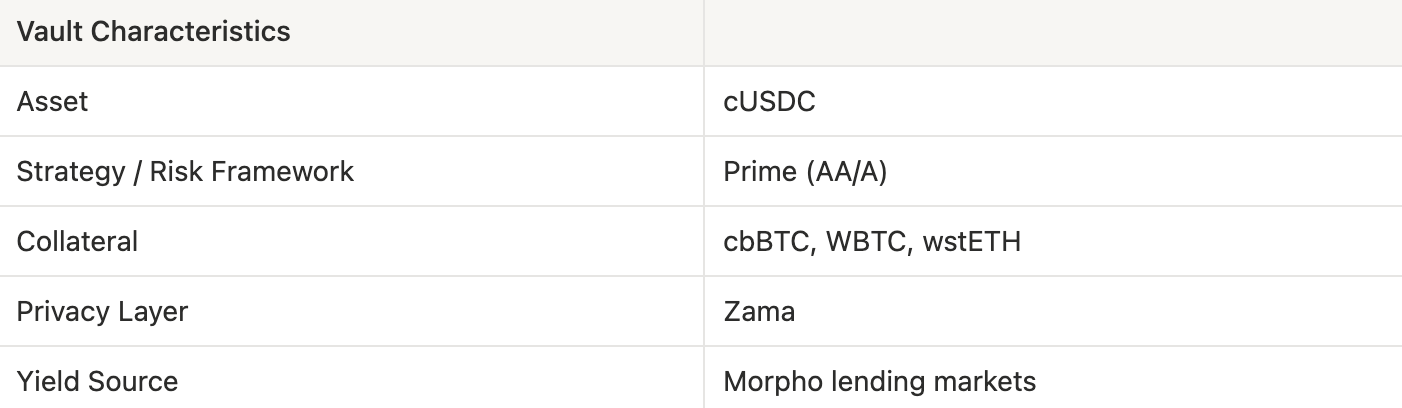
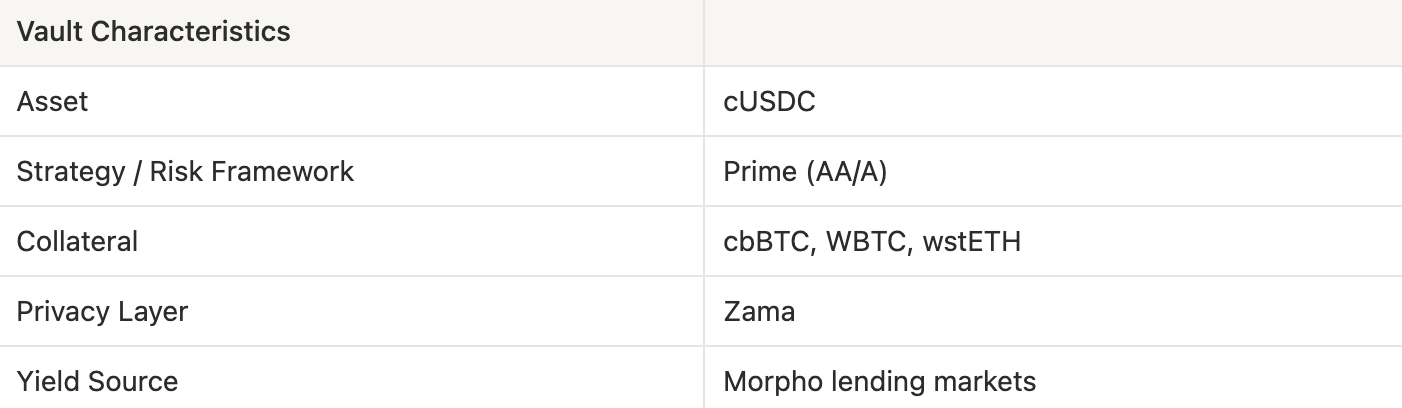
The strategy follows the same allocation framework, collateral exposure, and risk parameters as Steakhouse Prime V2:
Users can convert USDC into Confidential USDC through the Zama App and deposit directly into Steakhouse Confidential USDC Prime Vault. Deposits remain on Ethereum and earn yield from the underlying Morpho markets while balances and transaction amounts stay encrypted.
The vault is particularly useful for institutional allocators, corporate treasuries, and other large capital pools that actively manage positions onchain. Powered by Zama’s Fully Homomorphic Encryption (FHE), encrypted balances and transfers can reduce the visibility of position sizes, capital movements, and transaction activity while continuing to participate in onchain lending.