Welcome to another DeFi Markets Update—your no-nonsense briefing on the cryptobanking plumbing and market pulse.
USDC Borrowings on Base
Base has overtaken Ethereum Mainnet as the largest chain for USDC borrowings on Morpho, ending May with more than 65% more borrowings.
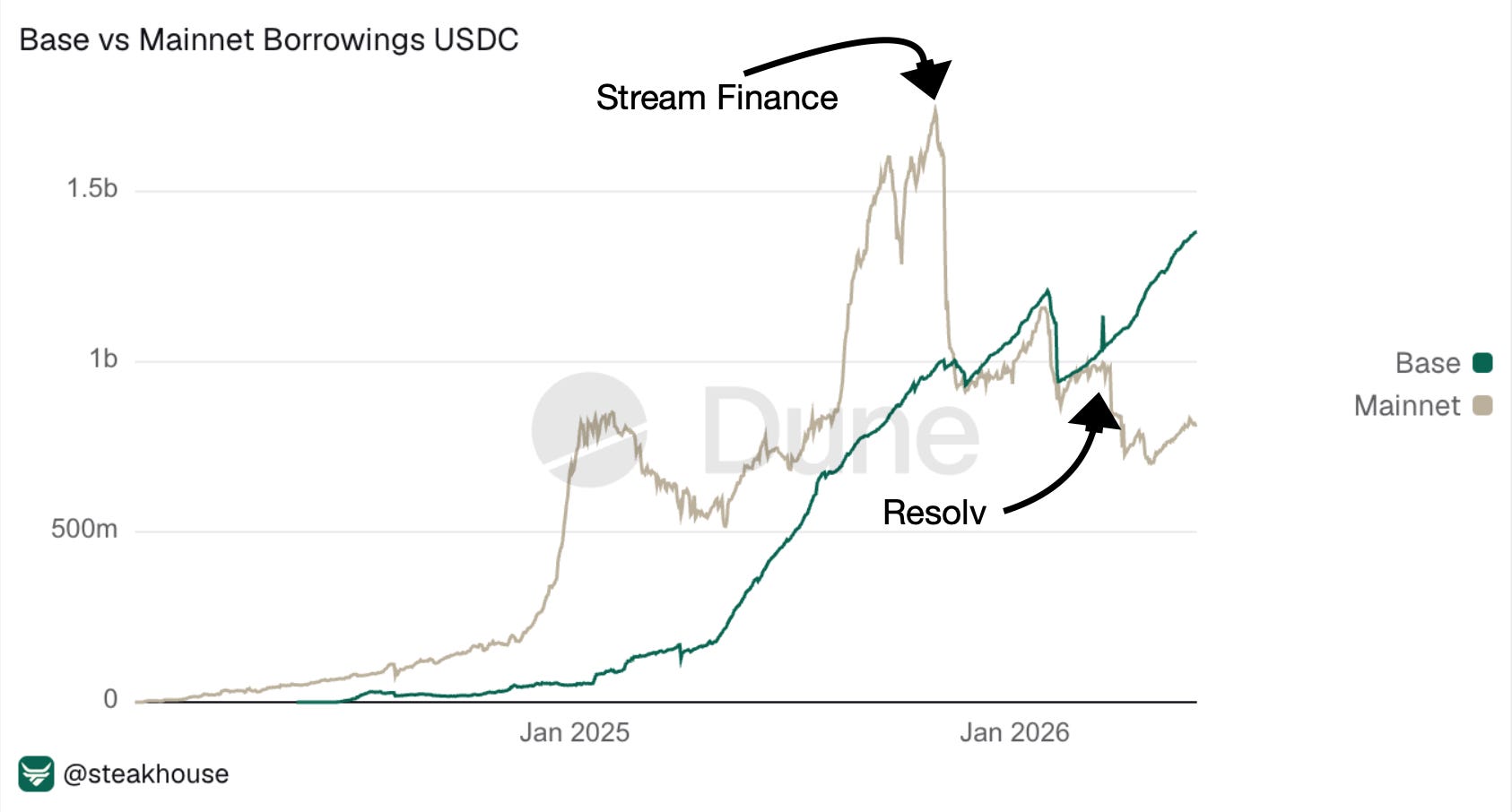
Both Base and Mainnet had been growing consistently over 2024 and 2025, until the Stream Finance exploit at the early start of November 2025, which caused Mainnet borrowings to drop by more than $700m in a single week. From then on, borrowings on both chains remained fairly similar in size. The Resolv exploit on 22 March marked another turning point, after which the two chains diverged, with Base continuing to grow while Mainnet borrowings declined yet again.
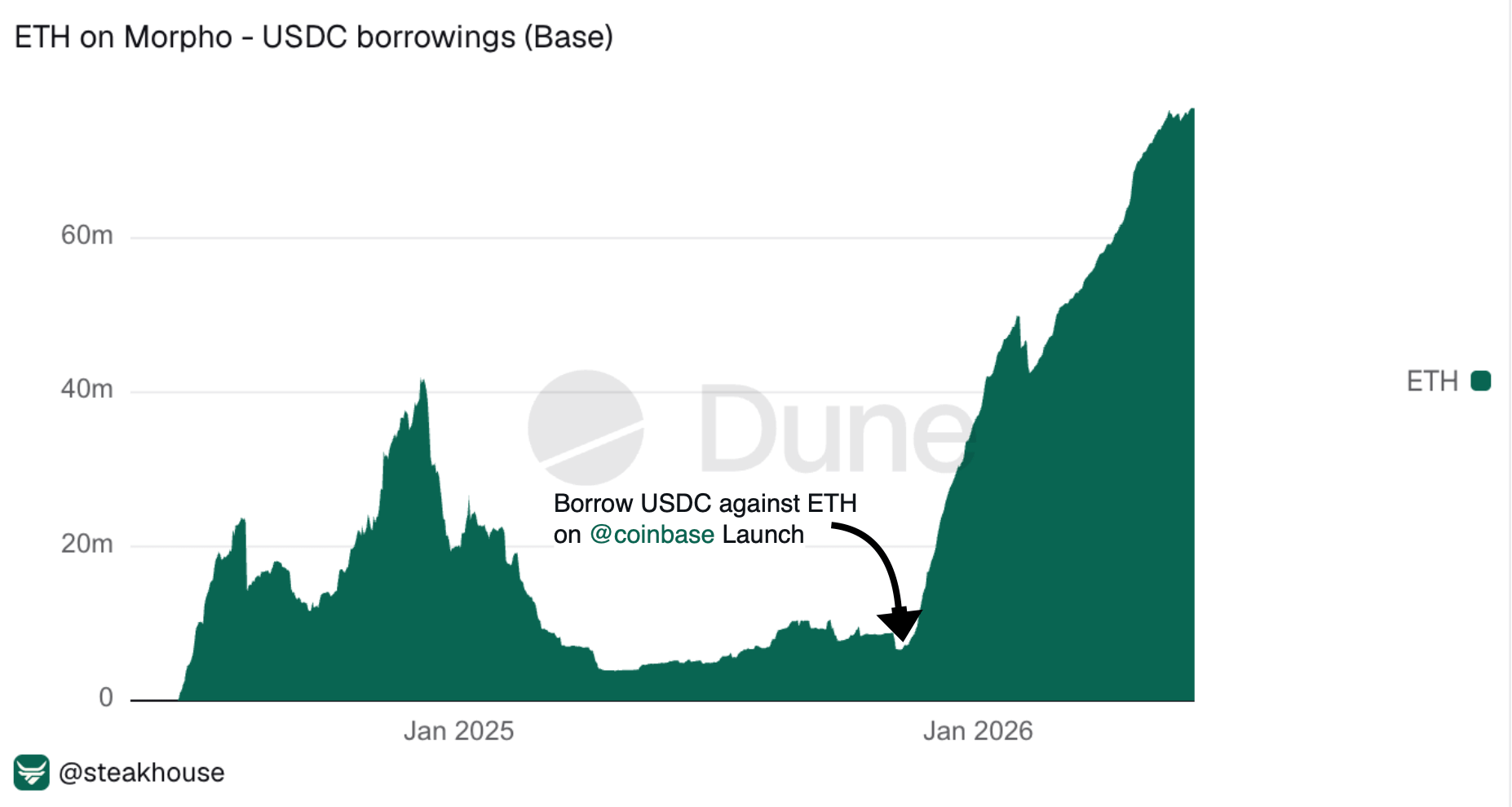
Furthermore, on Base, borrowing USDC against ETH has grown by more than 6.5x since Coinbase enabled its users to borrow USDC by posting WETH as collateral directly in Coinbase app, through its Morpho-powered borrowing product in late November 2025.
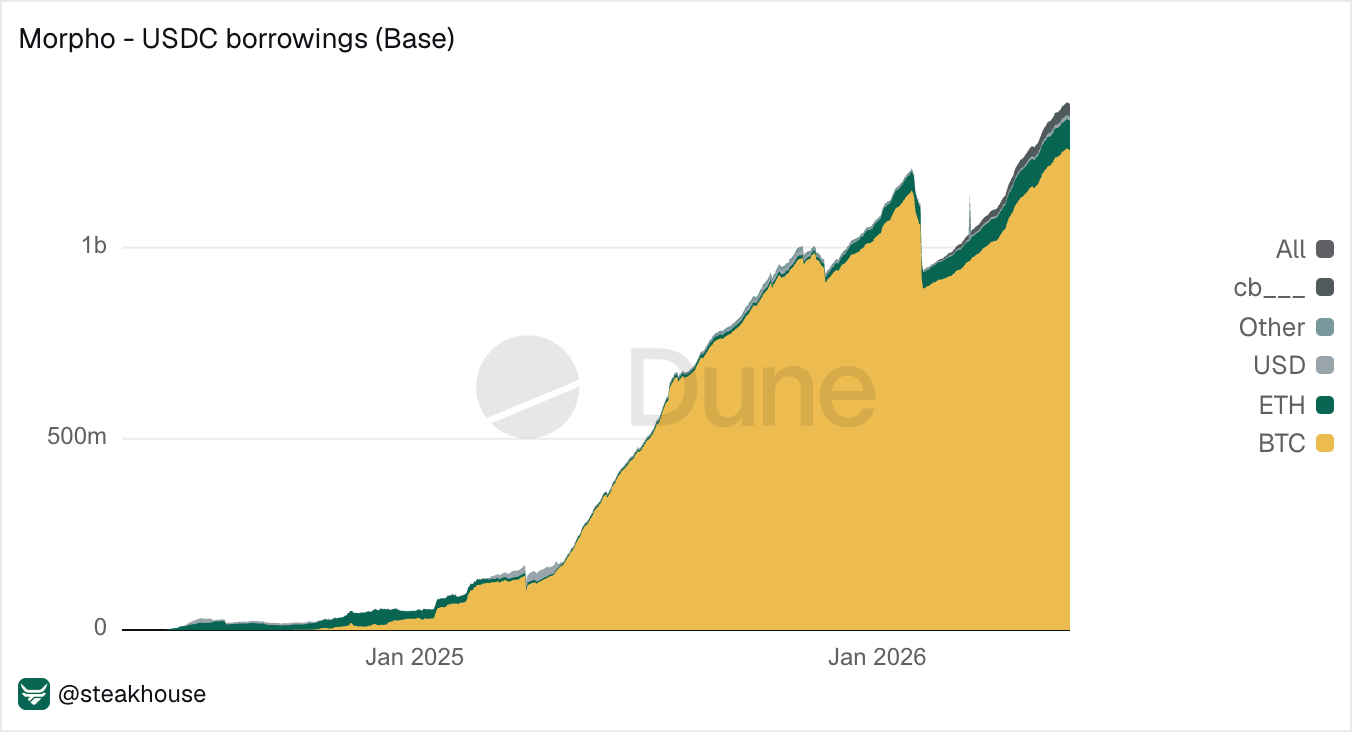
However, even with ETH borrowing growing rapidly, BTC remains the dominant collateral on Base, accounting for over 90% of all USDC borrowings and more than $1.2b.
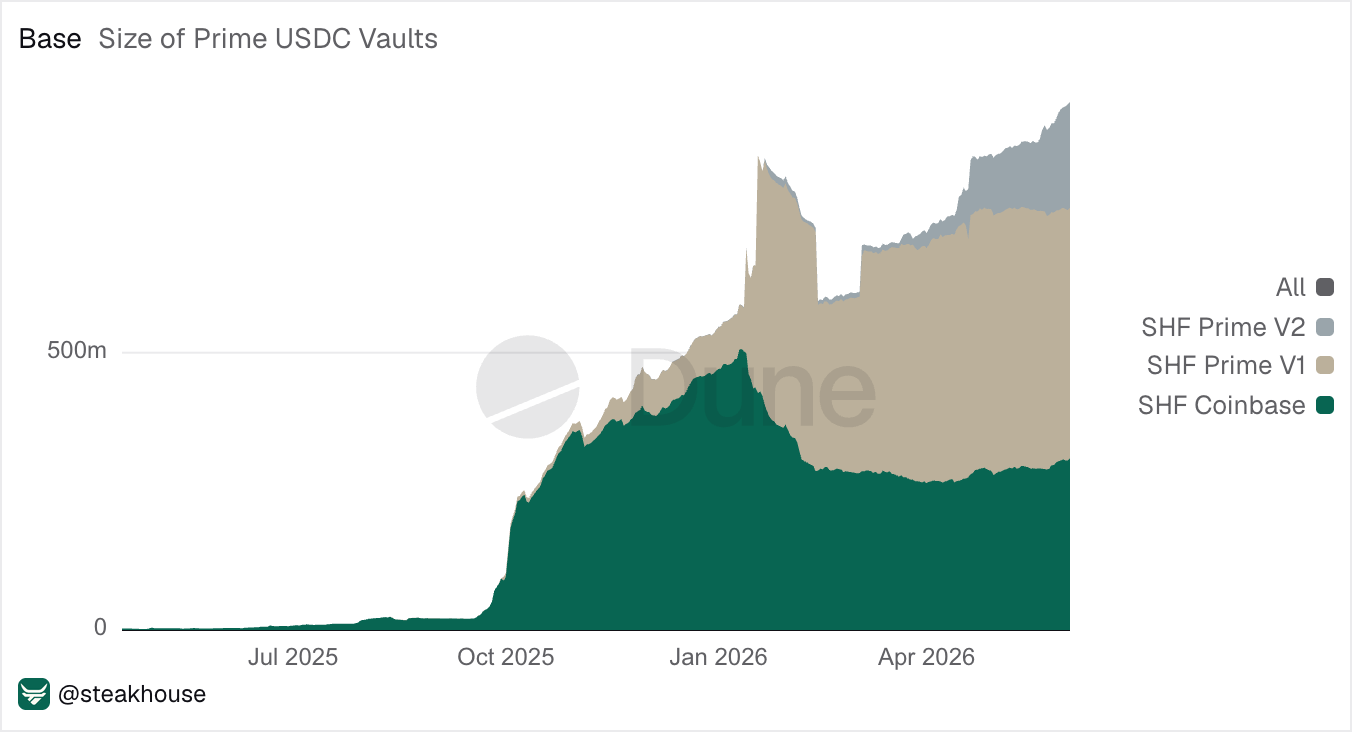
Growth across the three Steakhouse Prime USDC vaults closely mirrors the growth in USDC borrowings on Base. As the vaults allocate primarily to the largest borrowing markets, increasing borrow demand has driven growth in vault assets.
Trezor Launches Stablecoin Earn
Trezor, one of the original hardware wallet providers, launched a native Stablecoin Earn feature in Trezor Suite. Users can now deposit USDC and USDT into Steakhouse-curated Morpho vaults from within the app, with every transaction verified and signed on their hardware wallet.


Deposits are routed into Morpho vaults, where capital is lent to borrowers and earns a variable yield generated from lending activity. Users receive a vault share token representing their position and can withdraw at any time through Ethereum.
Trezor selected Steakhouse USDC Prime and USDT Prime as the underlying vaults powering the experience.
Summary:
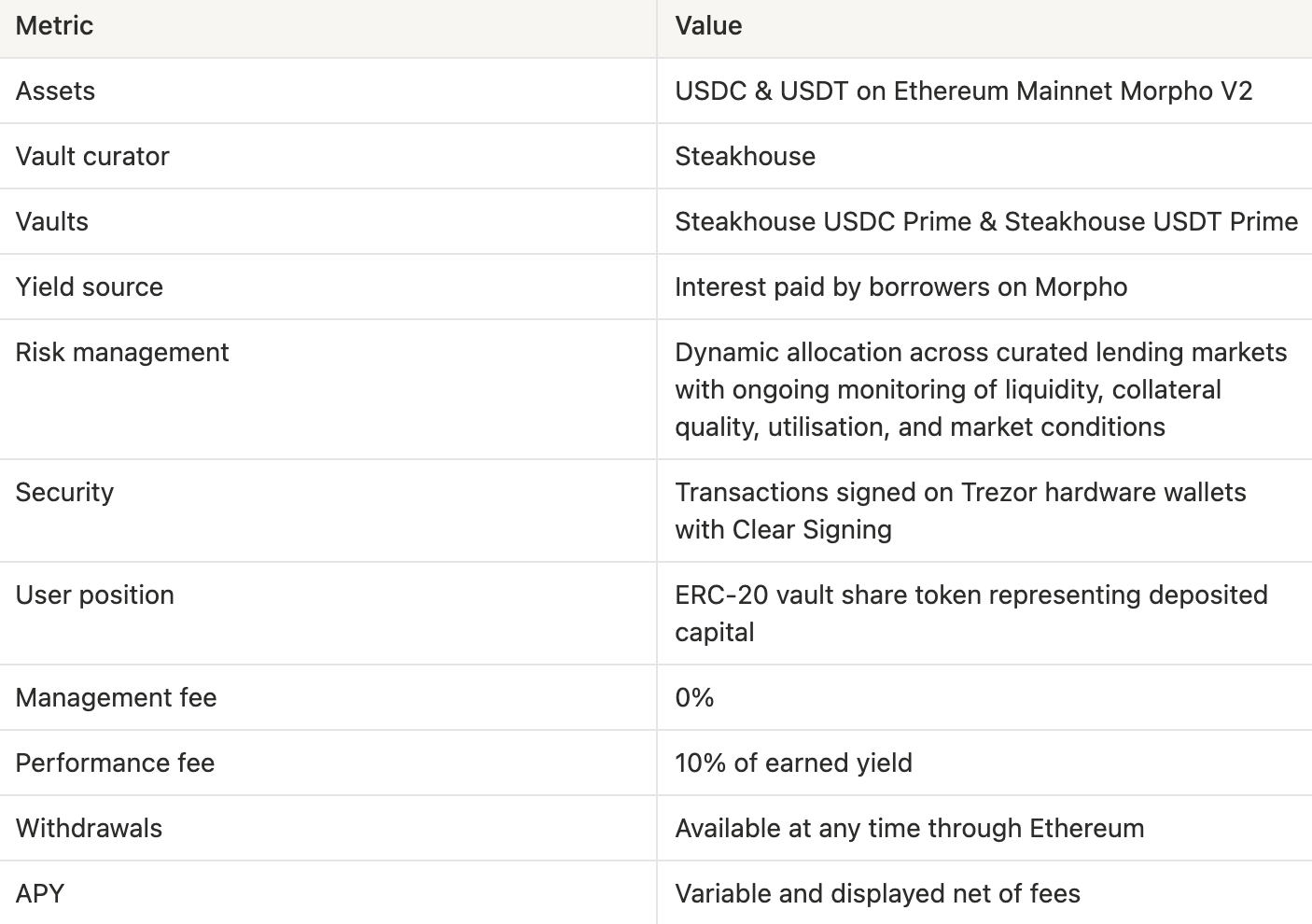
The integration turns Morpho lending into a native self-custody product, with Trezor handling the wallet flow and Steakhouse providing the risk curation layer underneath. Users get hardware-wallet signing, net APY visibility, and direct exposure to borrower-driven stablecoin yield, while the underlying vault strategy continues to manage allocations, liquidity, collateral quality, and market risk across Morpho lending markets.
High Yield Performance Across Chains
Steakhouse High Yield V2 on Base has outperformed most large-curator USDC vaults on Morpho over the past month, delivering around 50 basis points of additional yield.
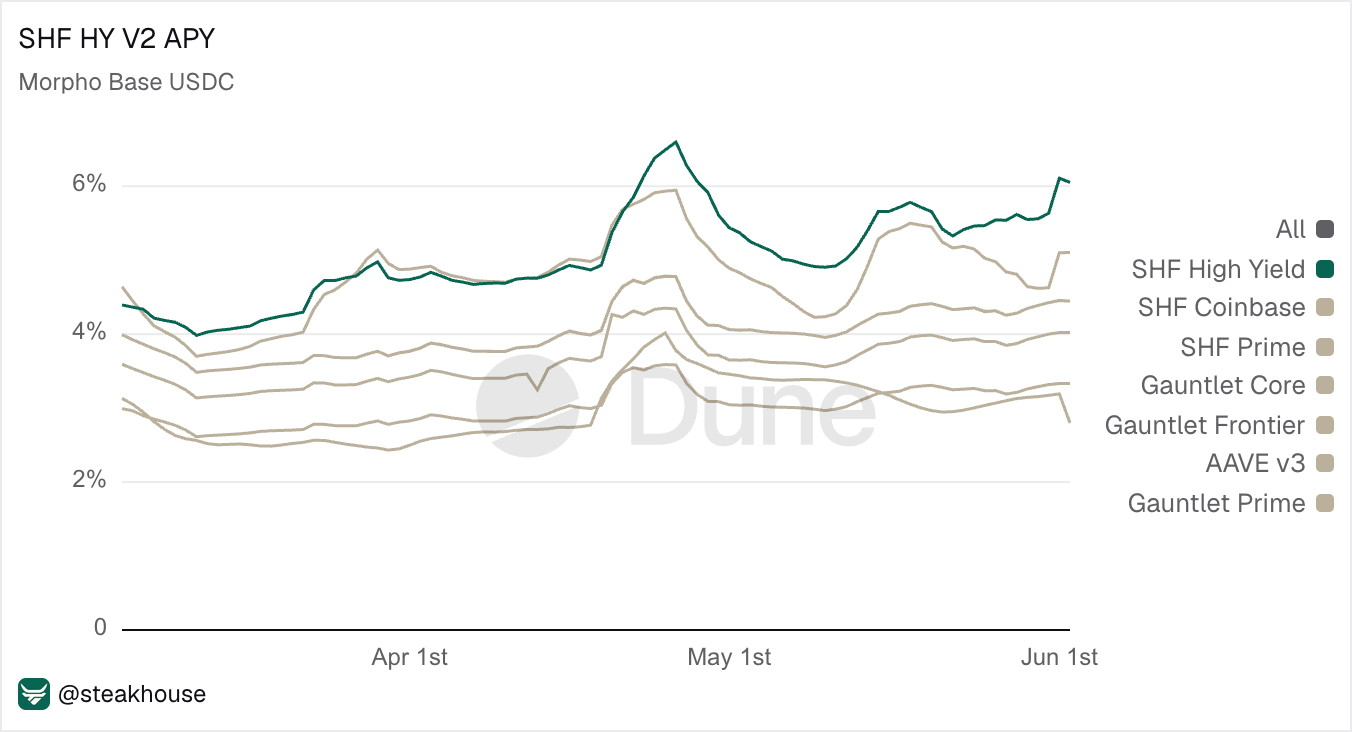
Interesting to note is that over the weekend, the vault saw a liquidity squeeze as capital was reallocated across the underlying markets. The largest allocations were concentrated in cbXRP, SOL and cbDOGE, where available liquidity fell close to zero relative to market size. As liquidity tightened, rates across the three markets jumped above 20%, which pushed the Steakhouse HY vault APY higher.
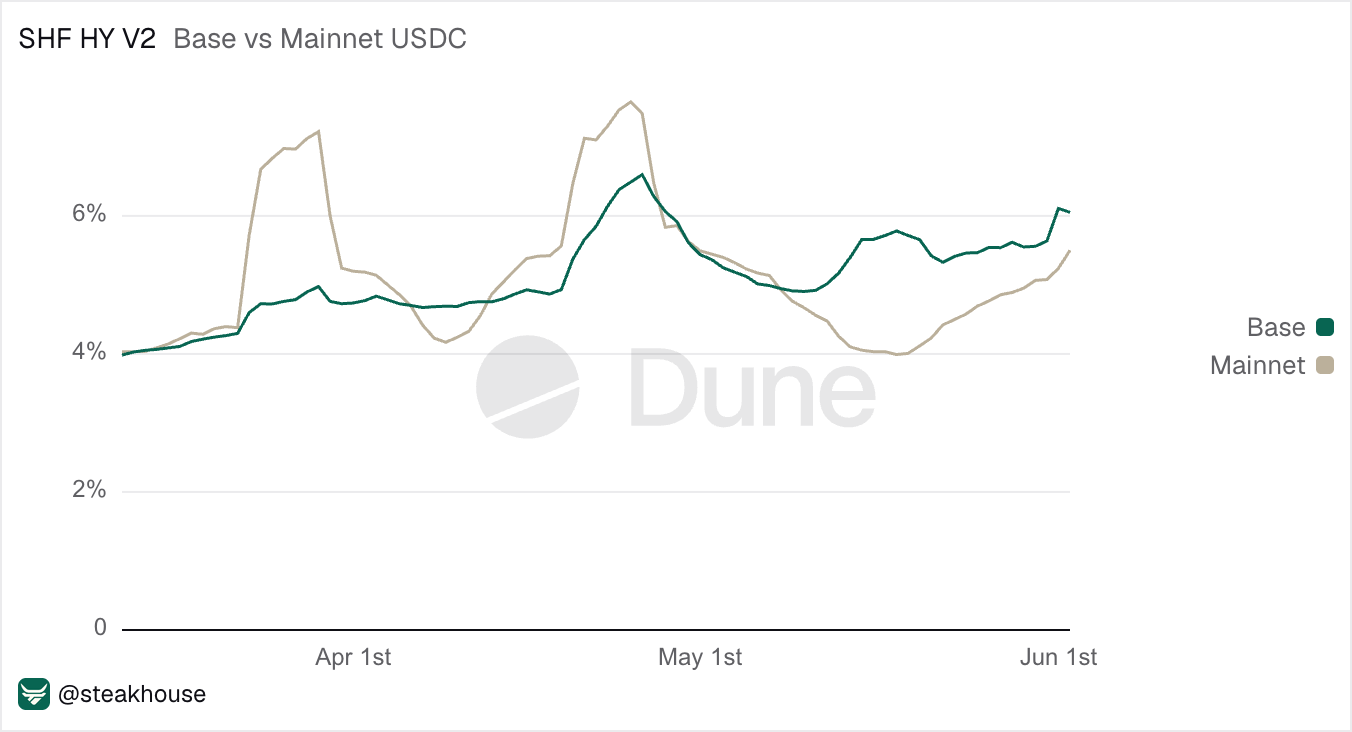
Furthermore, comparing the same V2 High Yield strategy across chains shows that Base now earns higher APY than the Mainnet one. Over the last month, the spread has been around 0.5-2%, likely driven by stronger borrowing demand across Base lending markets.